So: Finona won a couple of free hours of bowling at Lucky Strikes, and tonight was the night. As mentioned, I didn't want to risk bowling and bringing back the serious hurt, which has mostly cleared up to a dull ache. So instead, I sat on my fat ass and had a beer, a bleu cheeseburger and fries, which is the type of thing that's probably more responsible for my back in the long run than the couple of hours of heavy lifting that led to the current situation.
Still, the symptom is always easier to treat than the root cause, and, fuck it - it's the American Way! I feel like a patriot, now... although the beer was an import. The only import.
Tangentially, that's still one of Lucky Strikes' two weaknesses (the other being the non-period music, which was less obtrusive this time out, and the ladies enjoyed taking turns sitting on the subwoofer) - they have a pretty sad selection of beers. I'll attribute that to the fact that it's located in the Palisades Center. I'll bet that the one in Hollywood has a great selection on top... but Lousiville only has Schlitz. In 40 oz. cans.
And the 'New Technology' of the post title? Allow me to introduce the Manputer - our all-new (well, closeout, but you get the point) MacBook Pro 17" 2.33, etc., etc.
What can I say? My mind is truly blown.
D.
Monday, January 7, 2008


Sunday, January 6, 2008
Wrecktastic
So, just in time for the back issue to clear up, I think I've come down with pink eye.
Charming.
D.
Charming.
D.
Saturday, January 5, 2008
Mono in Stereo, Pt. II
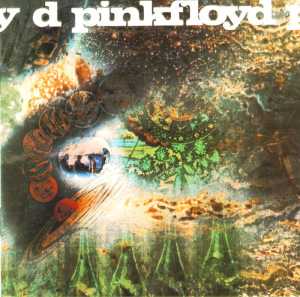
Pink Floyd • A Saucerful of Secrets
1968
Picking up where we left off:
Track Four: Corporal Clegg
Written by Roger Waters/Sung by David Gilmour & Nick Mason
In many ways, this song is Roger Waters' first actual song on record. As noted in the first half of this review, both Let There Be More Light and Set the Controls for the Heart of the Sun are less songs than modal jams, loose skeletons that the band could expand upon live in concert. And his sole composition on Piper at the Gates of Dawn fits even more into that category, offering little more than a few stop-time lines before the band launches into a total freak-out.
But Corporal Clegg offers up a fully arranged pop tune, complete with introduction, verse, pre-chorus, chorus and instrumental bridge and coda. Add to that Waters' first lyric about a World War II veteran having some seriously bad flashbacks to his war service accompanied by explosive sound effects and a marching kazoo battalion, and you've got the all of the ingredients of his last two albums with the Floyd over a decade later.
Of course, The Wall and The Final Cut have a deadly serious take on the subject, but Corporal Clegg is straight-up satire, both lyrically and musically. The lyric could go either way, with lines that on paper read as very cutting:
Corporal Clegg had a wooden leg
He won it in the war In nineteen forty four.
And the music in this section agrees with them, with fencing guitar and organ stabbing at each other in wrenchingly atonal clusters - a much heavier part than anything else on the album. But then the music shifts tones, going to a light three part vocal harmony over a lush major chord backing of wah-wah guitars and a descending Farfisa figure, for a visit with - well, either his wife or mother, but someone who's clearly in a state of denial about the situation:
Mrs. Clegg, you must be proud of him.
Mrs. Clegg, another drop of gin.
And from there, it's off to a marching band comprised of kazoos - of which more later.
In the meantime, take a look at the video - or 'promo clip,' as they called them in the pre-MTV days - and tell me that the images here wouldn't seem that out of place if you put a random track from The Final Cut over them:
Track Five: A Saucerful of Secrets
Instrumental • Written by David Gilmour, Nick Mason, Roger Waters & Rick Wright
A far more experimental track than anything they'd done before, for several reasons. First, with Barrett in the group, the band had more than enough song-oriented material to fill out a complete LP. Secondly, EMI was less open to releasing experimental electronic music from what they took to be a top-40 singles band, and Floyd early on was very much at the whim of their record label. However, on their second record, having filled out enough of the rest of the album with what producer Norman Smith regarded as more commercial material, the band was allowed 12 minutes for whatever they wanted to do.
Smith had served as engineer for the Beatles and hoped to make his name as producer with the Floyd - so it's certainly understandable that he'd view the free-form approach to music with less enthusiasm. Even Gilmour - again, having come from an R&B cover band - wasn't prepared for the kind of atonal mood approach to music that this track represented.
No wonder: for the first nine minutes, nothing happens that could be considered 'music' from any traditional point of view. The first section (of three) builds slowly, starting with a low rumble built from some very closely miked cymbals being stroked very gently with mallets. Wind chimes pan around, the Farfisa comes in with a wandering eerie feel, never settling into any traditional mode, and then more sound effects begin to tense the mood - strummed piano strings, clicks and electronic yelps, building to a crescendo that cuts to part two.
Part two features much of the same background effects (now run backwards), but is run through with an insistent drum loop from Mason and some scary mic-stand leg slide from Gilmour, the only real guitar on the track.
Part three is a radical break from the first two sections, beginning with the return of the Farfisa, much softer and mournful now, which gradually morphs into a requiem of rising chords, repeated several times with other elements coming in, including Mellotron, slide guitar and a wordless chorus, before resolving (a little abruptly due to time limitations) on a triumphal major chord.
Even after all this time, listening to it on headphones is, as they say, a 'trip.' The band, left to their own devices by Smith, begin to explore the recording studio for the first time, and clearly have a strong sense of its potential right out of the gate - and go further towards experimental music than almost any other major band ever has, marking a line in the sand and naming it 'progressive.'
Later on, of course, they had to find a way to reproduce the studio construction live, and that's another story altogether.
Track Six: See Saw
Written and Sung by Rick Wright
It's easy to see why this track ended up being sequenced directly after the dark and intense Saucerful, being the only somewhat traditional ballad on the entire album, and for a few moments after the opening chord, its gentle rolling quality and major tones are genuinely refreshing.
Sadly, the song doesn't hold-up, mostly by being a little more ambitious than the band could handle. The composition isn't, as the working title had it, 'The Most Boring Song I've Ever Heard Bar Two' (I'm thinking Waters coined that one), but the arrangement is so sloppy and stoned, awash, again, in a whole cavern's worth of reverb, Wright doesn't have a handle on the vocals, the band doesn't know where the accents go, and the whole thing gets really cocked up in the mix, which loses any momentum the rhythm section might give.
That having been said, I've always liked the composition - good chord change, and nice lyrics and melody. I have a suspicion that if there were a prominent rhythm guitar and Gilmour sang this and the verses were arranged to be more streamlined and greater dynamic overall, building, say, to a nice solo, this song would be well thought of.
I might have just suggested a project for myself, having once done an arrangement of Remember A Day that sort of cross-pollenated it with the Beatles' Rain. Of course, since I played all the instruments on it before I could even play several of them at the meager level that I can now, that version is really an area of total musical devastation, an atom bomb of megasonic craportions. Perhaps I'll put it up in the archives at some point, but I first need to dredge it up and digitize it. You have been warned.
Track Seven: Jugband Blues
Written and Sung by Syd Barrett
Sure, the first six tracks on the album offer a staggered portrait of all the possible Floyd's to come, but then Syd shows up to show what's been lost forever. I don't think a more effective 'goodbye' has ever appeared on record, and I have to think that the rest of the band were aware of it as well, by placing it last on the record. Certainly, there's nowhere else it could have gone. Really, what could follow it?
Jugband Blues is equal parts haunting and wistful, beginning with Syd's gentle acoustic strumming and vocal, accompanied by slide-whistle. From there it builds into a loose party atmosphere, reprising the march section from Corporal Clegg - creating it, really, since Jugband Blues predates that. Although the few times the band performed this track live, they did so with kazoos, on record Barrett had a Salvation Army band come in and lay down essentially whatever they wanted.
From there, the track segues into another Floyd studio freak-out, one that seems so effortless for Barrett and makes the formal structuralism of the title track seem like a month of bedsweats in comparison.
And then, back to the acoustic, and a few, sad last words from Syd before he disappears forever - at first seeming nonsense, but then resolving into a pained and unanswered question:
And the sea isn't green
And I love the queen
And what exactly is a dream
And what exactly is a joke.
Here's a live version that I was surprised to find. Even though the band is miming their performance, it really is a live version, different from the record. But still. Of all the possible futures that A Saucerful of Secrets represents, it's the unrealized future of this song that gives the album the ultimate air of finality it has, packing twelve massive concept albums' worth of angst into three short, sad minutes.
D.
Friday, January 4, 2008
Mono in Stereo
Pink Floyd • A Saucerful of Secrets
1968
The history of rock and roll is littered with albums that are figurative tombstones of the bands that imploded while making them. Frequently, the tensions in the studio end up producing something remarkable as a result. There are many examples - Bridge Over Troubled Water by Simon and Garfunkel; Younger Than Yesterday by The Byrds*; The Beatles' White Album and Odyssey and Oracle by The Zombies come to mind.
In fact, I can almost guarantee that if there's a band you like and an album of theirs has a particular resonance for you - not necessarily your favorite by them, but there's something about it - then if you were to read up on the making of the record, you'd see that the band itself was undergoing some major internal change, and no doubt a highly stressful period of external and internal pressures.
A Saucerful of Secrets is practically a complete mausoleum in this regard - recorded while the chief songwriter and singer was being ousted from the band while simultaneously losing his mind and featuring seven schizophrenic tracks that all point to radically different possible futures for the band. In fact, the entire album is so fractured - but compelling in that very quality - that it's nearly impossible to review it as a cohesive whole. It's more like a collection of singles or studio outtakes, material that didn't quite fit on several years worth of albums.
But at the same time, all elements of the past and future Floyd are present here in every song, pure and unadulterated. So we're going to approach it from a track-by-track analysis - and see what made it in to the mixer as the group went from being "The" Pink Floyd into what FM radio thinks of simply as Pink Floyd.
Track one: Let There Be More Light
Written by Roger Waters/Sung by Rick Wright (verse) and Dave Gilmour (chorus)
The newly leaderless Floyd leads of with a track that clearly distills the idea of the live set for the record. It's really two completely different songs in one, both minimally written riff-based sections that bear little relation to each other beyond the fact that both sections are modal and feature a repetitive bass figure. Section A kicks off the album on its most energetic note, with a galloping octave bass riff (with a flatted seventh thrown in to give it a space blues feel) joined first by a slightly jazzy ride compliment from Mason that moves into a headlong tom rush and some aggressive atonal Farfisa from Wright, who moves it from a blues feel to a Middle Eastern one, shifting back and forth from F minor to F major.
After a little over a minute, a studio edit (masked by a big cymbal wash) brings in the second section, the vocal part of the song. Again, the bass sets the tempo, this time a slow repetitive four. The Farfisa retains its feel, now feeling eerie against the more open verse. The guitar is minimal, suggesting to me (at least) that the song was developed while the band was in flux, perhaps initially in rehearsals without either Barrett or Gilmour.
The lyric is inconsequential, obliquely describing a Day The Earth Stood Still encounter in Mildenhall. Still, the song is a good lead off, featuring strong playing from the three remaining members, and Gilmour's solo at the end - his first on record with the band - being a nice coda to the song as the pulsing beat gives way to big crashing whole notes on piano and cymbals. The Gilmour playing here is almost unrecognizable, seeing as how Gilmour came from a band (The Joker's Wild) that played mostly blues covers into a band that was very much into lengthy modal jams awash in echo that sometimes moved into pure noise.
This being the early days of stereo - hard to imagine that quad was only four years away! - the use of stereo is very experimental, with whole instruments wide left or wide right, and a secondary track of organ-led freak-out coming in and panning channel-to-channel with the drums and guitar.
So: the first Pink Floyd album to open with a headlong bass instrumental. When they revisited that idea on Meddle, it would yield the substantially more well-known One of These Days.
Track Two: Remember A Day
Written and Sung By Rick Wright
Wright obviously took it upon himself to continue in the pop vein that Syd Barrett had done so well, and which had paid off in the Floyd's two hit singles, both Barrett compositions - Arnold Layne and See Emily Play.
Remember A Day had, in fact, been recorded for Piper at the Gates of Dawn, and would have been a more seamless fit with that album's English Pastoral on Acid vibe. Barrett plays the atmospheric slide that moves through the piece, which has a very organic blending of the Floyd's light feel and their tribal freak-outs. There's also some very nice acoustic acoustic in the quieter sections that come before each chorus, which I presume are Gilmour - which makes the song nearly unique in the Floyd catalog as having both Gilmour and Barrett contributing to the same track.
It's very much a song, it marked contrast to the open modal jams of preceding track and the track which follows it, Set the Controls for the Heart of the Sun. And here's the odd thing: it's also stronger lyrically, which goes against the general storyline of Pink Floyd. Where both the Waters lyrics are spacey and inconsequential, Wright picks a theme with some emotion and manages to convey it clearly. In fact, both of Wright's contributions to Saucerful focus on the same theme, a wistful look back at childhood, touched with the melancholy of knowing it's gone for good:
Remember a day before today
A day when you were young
Free to play along with time
Evening never comes
Sing a song that can't be sung
Without the morning's kiss
Queen, you shall be it if you wish
Look for your king
Why can't we play today
Why can't we stay that way
Climb your favourite apple tree
Try to catch the sun
Hide from your little brother's gun
Dream yourself away
Why can't we reach the sun
Why can't we blow the years away
Blow away...
Remember.
Bear in mind that Wright was all of 22 when he wrote those words.
As with most of Wright's more pop oriented songs, he moves away from his Farfisa and Binson Echorec and accompanies his vocal with a very gentle and open piano, even going so far as to play the chorus with a free tinkling. The song overall is drenched in (too much) reverb, and the vocal isn't quite up to the task of singing the very nice melody, but it does add to the plaintive, aching quality of the song.
Track Three: Set the Controls for the Heart of the Sun
Written and Sung By Roger Waters
The album's first taste of the Floyd sound that would dominate their live shows for the next five years - in fact, the song itself was played through 1973, even along side the complete Dark Side of the Moon.
Like Let There Be More Light, the vocal melody is a direct parallel of the bass line, which is in turn harmonized by some ethereal Farfisa. Again, the lyric is light as air, an assemblage of images that's clearly meant to set a mood than to lead to a concrete meaning - and, in fact, were mostly cribbed from a T'ang Dynasty era book of poetry. But they work perfectly, put just right in the mix to the point that the vocal and bass share such a similar tone and timbre that they feel like one instrument, and Waters' slurred delivery gives the whole thing a beautifully meditative quality that's borne aloft by Mason's tom and beater work.
The whole thing seems evocative to me of a sunrise service at a seaside Taoist temple, designed to drive the listener inward: Someone plays a spare and jazzy Vibraphone (I'd guess Wright, but you never know) AND a trippy chromatic Xylophone, and the Floyd's gong can be heard pulsing away in the background. At 1:30, something almost like a bullroarer makes a brief appearance - and at the end, seagulls can be heard, panning from left to right.
The track is excellent ear candy, and just about the best mix on the album - perfectly complementing the tight and controlled playing from the full band. Even the two or three completely obvious tape edits in the song's central jam feel right, as if the listener's mind had slipped. Again, the track features both Gilmour and Barrett, but the guitar presence is quite minimal, mostly relegated to background wah-wah atmospherics.
Next: More S.O.S.
*The Byrds are a particularly interesting example, because the late 60's saw them in such a state of flux with a major member either arriving or departing with each album that four albums in a row have that desperate, seeking quality to them - each being a landmark in its own way.
Thursday, January 3, 2008
Wednesday, January 2, 2008
Point of Re-entry
Sure, taking almost two weeks off from daily blogging seems like a good idea - but the difficulty is all on the back-end, when you realize that, in the interim, you've forgotten how to generate several paragraphs of crap every night. So bear with me for a few days worth of rambling Ramblers as the crew in engineering gets the warp field going and we can get this thing underway.
And in the meantime, expect a few entries about blogging itself; that seems to be how this logjam manifests itself.
I hesitate to write too much about any kind of New Year's resolutions in this space - as in last night's entry, I'm superstitious enough (a sad trait in one who considers himself a stone secularist) to keep my resolutions to myself, lest I fail to follow through with them and look like a fool. Willpower ever being my least reliable trait.
Case in point: the above sentence originally read "keep my resolutions to myself, lest they not come to fruition," the psychology of which is pretty transparent, a window to my personality with a view that isn't very flattering. As if my resolutions were things unto themselves that I held no responsibility for. As if simply deciding a thing were equivalent to acting on it.
Ah. Wouldn't it be nice?
Note, after all, the initial promise of a revised Copper Man site to have debuted... uh, this past Tuesday. Well, Tuesday's come and gone, and where is the site? Good question. Allow me to push the date back (forward?) to February 1st, and try not to judge me too harshly. And the site will go up then, even if it's in an incomplete state of incompleteness.
Part of the delay on the site - indeed, the main issue with my inability to navigate life so well - is that I often lack the ability to impose a form on things. Thus, anything I have to do is seemingly infinite in nature. I haven't yet been able to come up with a practical navigation for the site because I perceive the site as being as near a complete archive of my life's endeavors as I can make it.
Brilliant idea, of course, but even the best organized of us would blanch at the idea of trying to order 37 years worth of content into any kind of sensible order. And I am far from being the best organized. Is the position for 'least organized' open? If so, I nominate me.
Anyway, the obvious way to proceed is to create a framework, post the framework, and then fill in the missing squares as I go. the real trick will be in giving myself enough flexibility at the outset to allow myself to create entire new sections, if need be, without having to go through all the trouble of redoing the home page and navigational structure. To accomplish this, it seems sensible to break the site into a series of mini-sites, only really joined at the top level, but that does go against my web philosophy of minimal work to navigate and maximum interconnectivity.
Plus, the mini-site idea has the potential to break down into complete chaos in a very short while. Let me give a for instance: Let's say that, just off the home page, I have a master section dedicated to my illustration. From there, we would break it down into - oh, I don't know, color and black and white. Seems sensible enough.
But how about navigating by subject? Or time period? Lord knows, I want to include a very sizable selection of juvenilia, but my ego forbids anyone from confusing those pieces with my current ability. Still, the whole point of including the high-school work is to allow people to trace my progress (or lack thereof) as an artist. So, rather than having the same work over and over and over again, it seems more likely that I instead want to create some multidirectional approach to navigation.
Time, subject, media, etc.
Hmmm. And how would that navigation take form? Some kind of rotating compass, indicating the possible directions the viewer can travel? Sounds enticing, but it goes far beyond my abilities to create that automatically, so I would need to create each link manually. The labor involved in that concept is a little cowing.
Thoughts?
D.
And in the meantime, expect a few entries about blogging itself; that seems to be how this logjam manifests itself.
I hesitate to write too much about any kind of New Year's resolutions in this space - as in last night's entry, I'm superstitious enough (a sad trait in one who considers himself a stone secularist) to keep my resolutions to myself, lest I fail to follow through with them and look like a fool. Willpower ever being my least reliable trait.
Case in point: the above sentence originally read "keep my resolutions to myself, lest they not come to fruition," the psychology of which is pretty transparent, a window to my personality with a view that isn't very flattering. As if my resolutions were things unto themselves that I held no responsibility for. As if simply deciding a thing were equivalent to acting on it.
Ah. Wouldn't it be nice?
Note, after all, the initial promise of a revised Copper Man site to have debuted... uh, this past Tuesday. Well, Tuesday's come and gone, and where is the site? Good question. Allow me to push the date back (forward?) to February 1st, and try not to judge me too harshly. And the site will go up then, even if it's in an incomplete state of incompleteness.
Part of the delay on the site - indeed, the main issue with my inability to navigate life so well - is that I often lack the ability to impose a form on things. Thus, anything I have to do is seemingly infinite in nature. I haven't yet been able to come up with a practical navigation for the site because I perceive the site as being as near a complete archive of my life's endeavors as I can make it.
Brilliant idea, of course, but even the best organized of us would blanch at the idea of trying to order 37 years worth of content into any kind of sensible order. And I am far from being the best organized. Is the position for 'least organized' open? If so, I nominate me.
Anyway, the obvious way to proceed is to create a framework, post the framework, and then fill in the missing squares as I go. the real trick will be in giving myself enough flexibility at the outset to allow myself to create entire new sections, if need be, without having to go through all the trouble of redoing the home page and navigational structure. To accomplish this, it seems sensible to break the site into a series of mini-sites, only really joined at the top level, but that does go against my web philosophy of minimal work to navigate and maximum interconnectivity.
Plus, the mini-site idea has the potential to break down into complete chaos in a very short while. Let me give a for instance: Let's say that, just off the home page, I have a master section dedicated to my illustration. From there, we would break it down into - oh, I don't know, color and black and white. Seems sensible enough.
But how about navigating by subject? Or time period? Lord knows, I want to include a very sizable selection of juvenilia, but my ego forbids anyone from confusing those pieces with my current ability. Still, the whole point of including the high-school work is to allow people to trace my progress (or lack thereof) as an artist. So, rather than having the same work over and over and over again, it seems more likely that I instead want to create some multidirectional approach to navigation.
Time, subject, media, etc.
Hmmm. And how would that navigation take form? Some kind of rotating compass, indicating the possible directions the viewer can travel? Sounds enticing, but it goes far beyond my abilities to create that automatically, so I would need to create each link manually. The labor involved in that concept is a little cowing.
Thoughts?
D.
Tuesday, January 1, 2008
Welcome Back (Pain)
For those of a superstitious bent, who believe that the way they enter the new year will dictate the way the new year is lived, witness:
1) When the basement flooded in April of 2007, I decided to move some of my crap into storage.
2) This included comic storage longboxes (unwieldily), vocal PA systems (heavy), bass amplifiers (heavy and unwieldily), and other things of this nature.
3) This storage cost me $100 a month.
3a) I'm very cheap.
4) After putting it off, I decided on December 29th to go and empty the storage unit.
5) But first, I picked up cinder blocks (h) and plywood (h & u) to make a platform to keep the stuff dry in the basement in case of water.
6) I did the move.
7) Now I'm paying for it, with a startling inability to even sit up without feeling like Andre the Giant is working over my kidneys.
The most annoying thing? I desperately wanted to enjoy bowling at Fiona's free bowling party at Lucky Strikes on Monday. Now I'm going to have to sit on my ass and just talk shit about other bowlers, without really showing them who's boss.
Sucks, eh?
D.
1) When the basement flooded in April of 2007, I decided to move some of my crap into storage.
2) This included comic storage longboxes (unwieldily), vocal PA systems (heavy), bass amplifiers (heavy and unwieldily), and other things of this nature.
3) This storage cost me $100 a month.
3a) I'm very cheap.
4) After putting it off, I decided on December 29th to go and empty the storage unit.
5) But first, I picked up cinder blocks (h) and plywood (h & u) to make a platform to keep the stuff dry in the basement in case of water.
6) I did the move.
7) Now I'm paying for it, with a startling inability to even sit up without feeling like Andre the Giant is working over my kidneys.
The most annoying thing? I desperately wanted to enjoy bowling at Fiona's free bowling party at Lucky Strikes on Monday. Now I'm going to have to sit on my ass and just talk shit about other bowlers, without really showing them who's boss.
Sucks, eh?
D.
Subscribe to:
Posts (Atom)